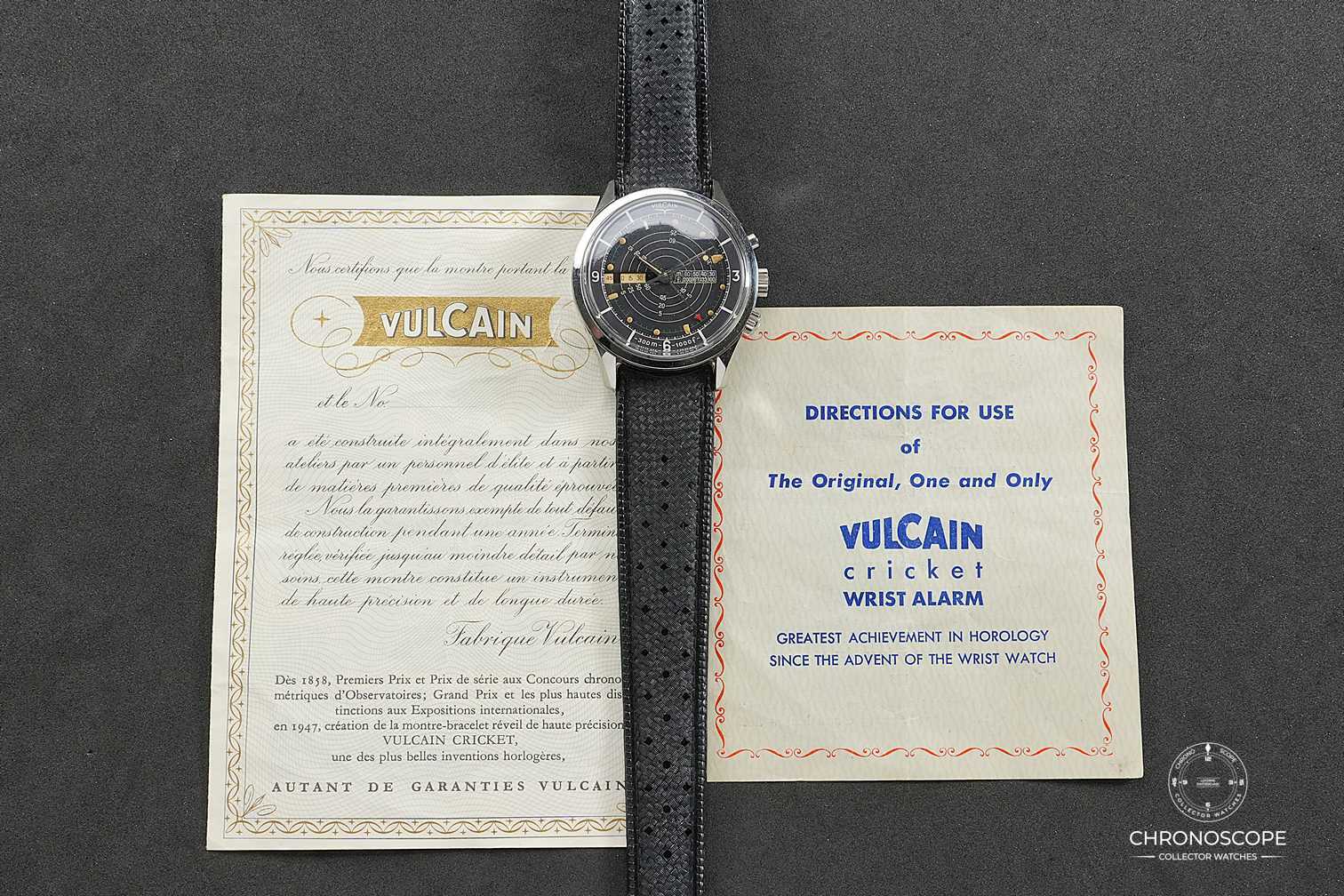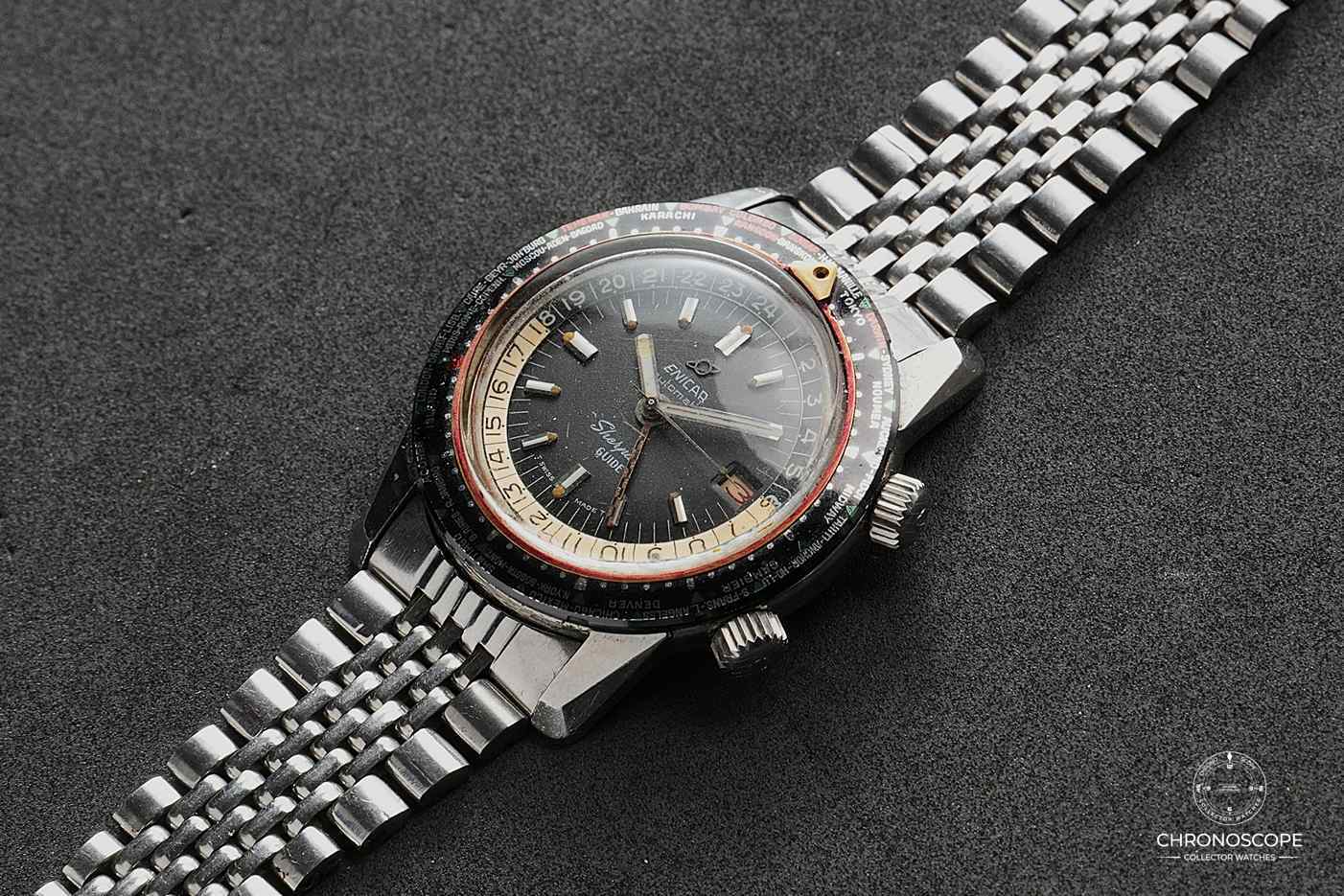
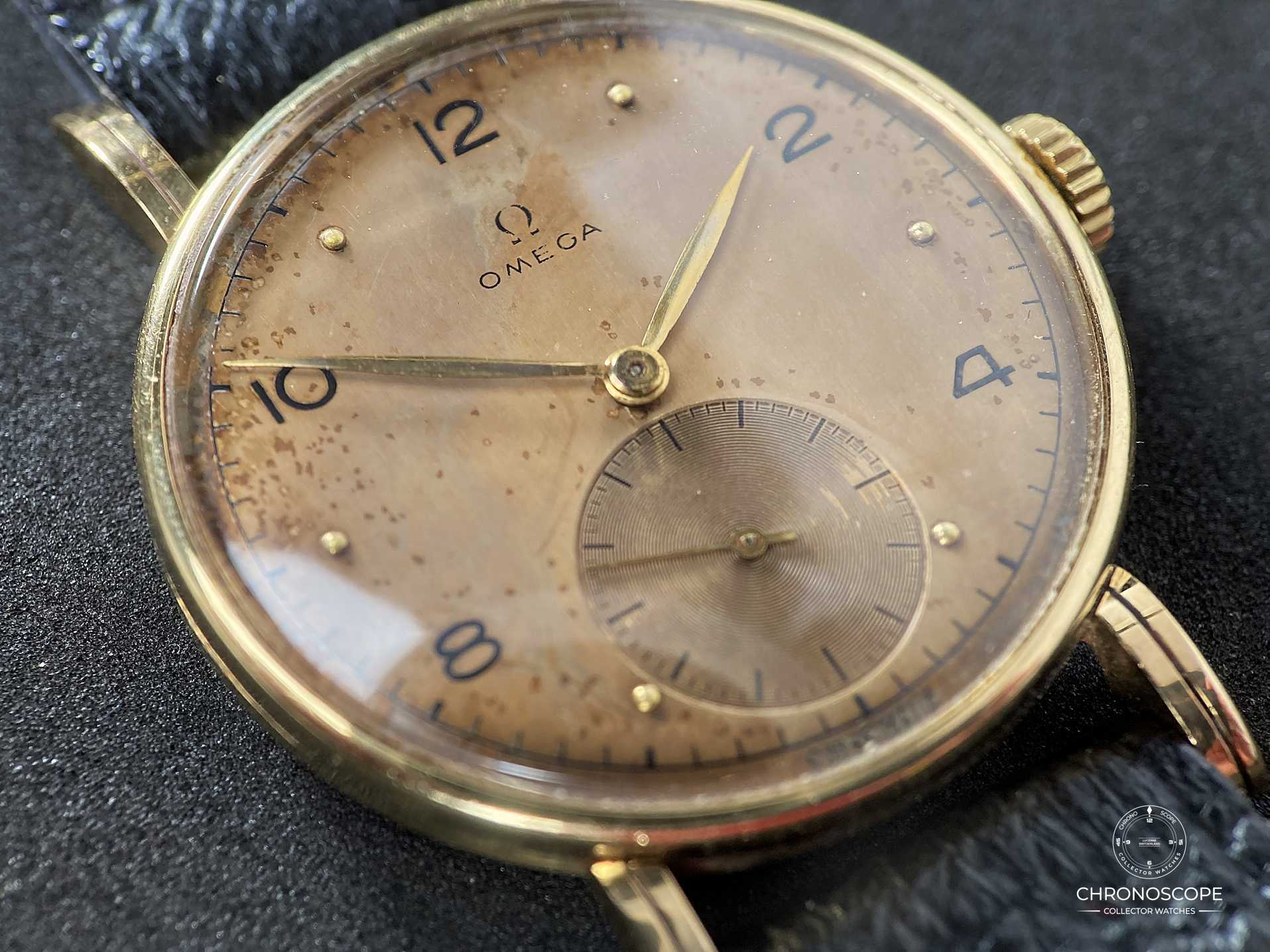
A valuable vintage watch dial does not need to look perfect. Originality usually matters more than a spotless appearance. Clear printing, correct signatures, matching lume and believable ageing can make an original dial far more desirable than a cleaner dial that has been repainted or heavily restored.
Patina, tropical colour changes and natural stone dials can all add character and value, but only when they are genuine, attractive and appropriate for the reference. Damage, moisture and poor restoration should not be presented as desirable ageing.

The dial is the part of the watch we see most often. It defines the watch’s identity and has a major influence on how collectors judge originality.
A case can show scratches. A movement can be serviced. A bracelet can sometimes be replaced. The original dial, however, is much harder to replace without changing the character of the watch.
Collectors examine details such as:
Small differences can help confirm whether the dial belongs to the correct reference and production period.
A clean dial is not automatically an original dial.
Some refinished dials look attractive in ordinary photographs. Under magnification, the printing may be too thick, the letters may have incorrect proportions or the minute markers may not line up correctly.
An original dial may show:
These signs are not automatically positive, but they can be acceptable when the dial remains honest and readable.
For rare references, an original dial with visible ageing may be worth considerably more than a perfect-looking redial.

Patina is the visible change that develops as materials age.
On a vintage watch, patina may affect:
Collectors often appreciate patina when it develops evenly and suits the rest of the watch.
Examples may include:
Patina should look believable. The dial, hands, case and bezel do not need to age identically, but their condition should tell a consistent story.
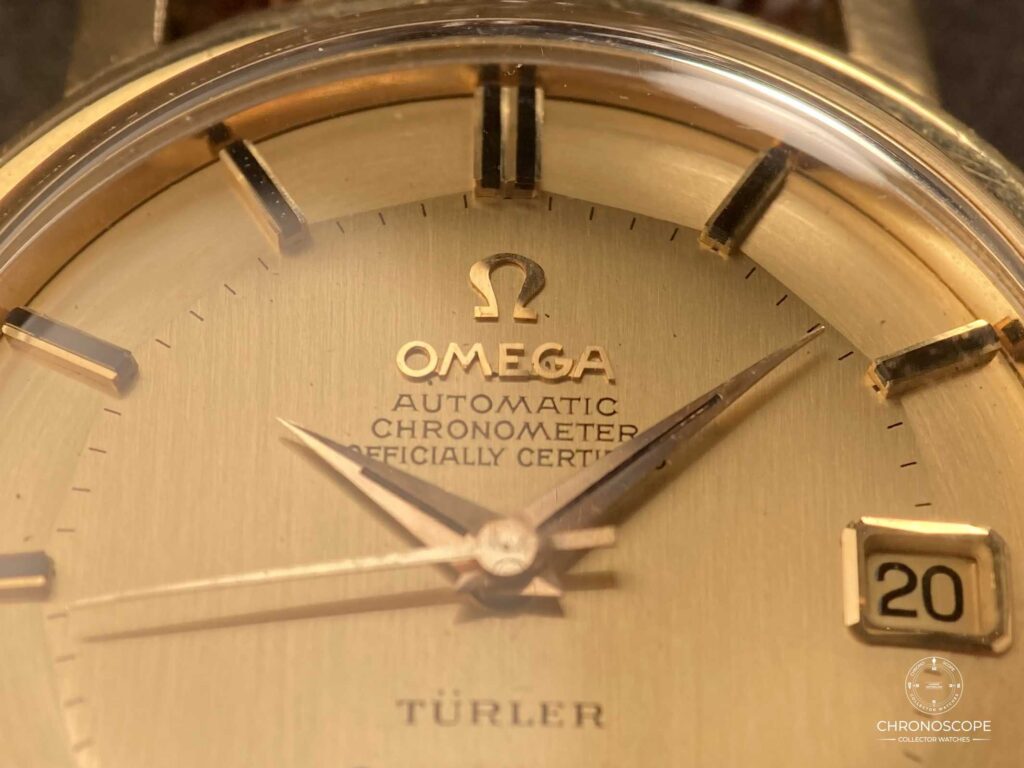
No.
The word patina is sometimes used to make damage sound attractive.
Moisture, corrosion and deterioration are not automatically desirable. A dial with severe water damage may be original, but that does not mean collectors will value it highly.
Warning signs include:
The difference between attractive ageing and damage depends on the model, severity and overall appearance.
A lightly spotted rare dial may still be highly desirable. A common dial with heavy corrosion may not be.
A tropical dial is a dial whose original colour has changed naturally over time.
The best-known examples are black dials that have changed to shades of:
These changes may result from a combination of dial lacquer, pigment, UV exposure, temperature, humidity and production batch.
Not every brown vintage dial is tropical. Some were manufactured in brown from the beginning. Others have changed colour because of severe moisture damage rather than attractive ageing.
A genuine tropical dial should be evaluated in the context of the exact reference.

Collectors usually look for several qualities.
A rich and even brown tone may be more desirable than an uneven or muddy colour change.
There is no single ideal shade. Some collectors prefer light caramel tones, while others look for darker chocolate surfaces.
The logo, scales and text should remain clear.
A dial that has changed colour but lost most of its printing may be less desirable than one with a more subtle colour change and sharp details.
The dial should fit the rest of the watch.
A strongly aged dial inside a heavily restored case may need more explanation. A faded dial with brand-new replacement hands can also look inconsistent.
Some references are known for tropical dial changes. Documented examples and recognised production batches make assessment easier.
A colour change on an unknown or poorly documented reference should be examined more carefully.
The colour should look like natural ageing rather than a recently manufactured effect.
A good tropical dial often shows subtle variation when viewed from different angles.
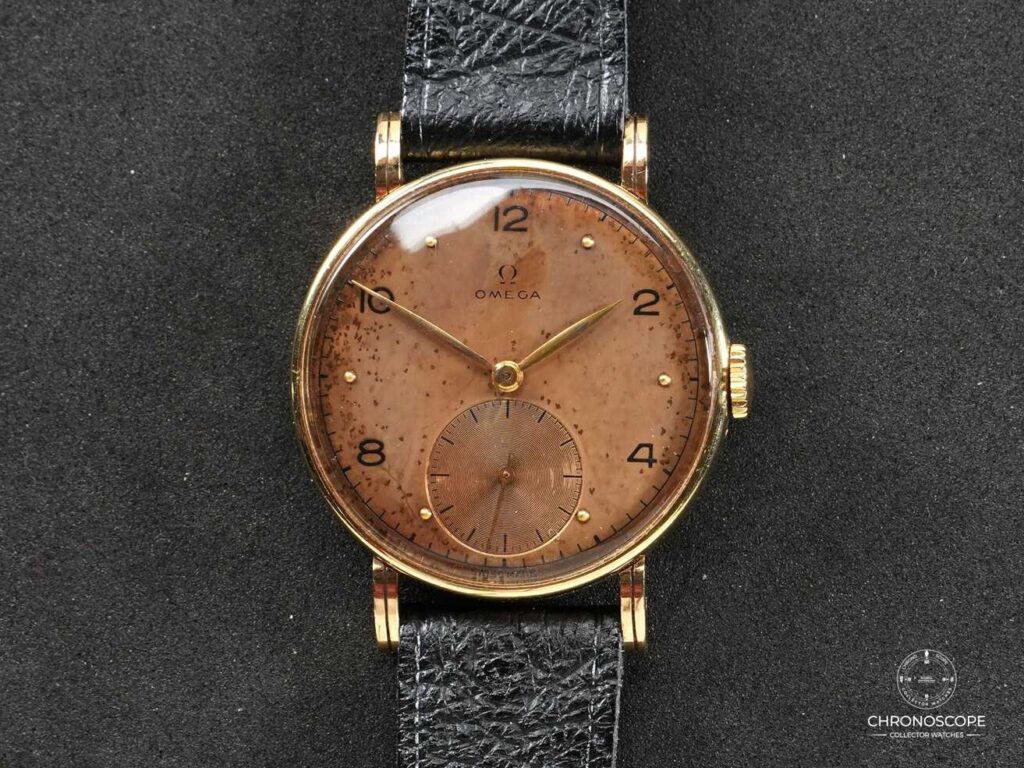
Yes.
The popularity and value of tropical dials have encouraged artificial ageing.
Heat, UV exposure and chemicals may be used to change the colour of a dial. Some treatments are crude, while others can be difficult to detect from photographs.
Possible warning signs include:
One image is rarely enough for a confident decision.
A serious assessment should include photographs in neutral light, angled views and magnified details.
Luminous material can provide important clues about originality and previous work.
Collectors often compare the lume on:
A similar tone across the watch can be reassuring, but perfect colour matching is not required.
Hands and dials may age differently because they use different materials or were exposed to different conditions.
Large differences can still raise questions.
For example:
UV light can provide additional information, but it should not be treated as a simple pass-or-fail test. Different luminous materials react differently depending on age, composition and exposure.
A redial is a dial that has been repainted, reprinted or restored.
Sometimes the original metal dial plate is used, but the visible finish and printing are new.
Redials range from obvious low-quality work to highly convincing restoration.
Common signs include:
A redial can still be suitable for someone who wants an attractive watch to wear. It should simply be described honestly.
Problems arise when a restored dial is presented as untouched and original.
A service dial is a replacement dial installed by the manufacturer or an authorised service centre.
It may be completely genuine, but it was not originally fitted to the watch when it was first sold.
A service dial can offer:
For a collector focused on original condition, it usually has a different value from the original period dial.
The distinction should always be disclosed.
No single detail proves that a dial has been refinished.
The best method is to compare several elements with documented examples of the same reference.
Look at:
Check the shape of letters and numbers.
Pay attention to:
The minute markers should be consistent and correctly positioned.
On a poor redial, they may be uneven, too thick or incorrectly spaced.
Applied logos should match the expected design and position.
Printed logos should have the correct shape and proportions.
Retailer signatures and special text require extra caution because they can add considerable value and are sometimes reproduced.
Chronograph and small-seconds subdials may have a different texture from the main dial.
Check:
Relumed markers may have an incorrect shape, texture or colour.
Original lume is not always tidy, but it should suit the manufacturing style of the period.
Stone dials are made from thin slices of natural stone rather than conventional painted metal.
Every stone dial is different because natural colour, grain and inclusions vary.
Materials used in watches include:
Stone dials became especially associated with luxury watches during the 1960s, 1970s and later decades.
They remain attractive because no two examples are exactly alike.
Natural stone is fragile.
The material must be cut very thin so that it fits inside the watch case without interfering with the hands and movement.
Production may involve:
The dial can crack during production, assembly, servicing or impact.
This difficulty contributed to limited production and high rejection rates.

Several factors influence value.
A rare stone dial fitted to an important reference may be highly desirable.
The same material in a less collected watch may attract less demand.
Some stones are rarer, more fragile or more visually distinctive than others.
Deep blue lapis lazuli with visible gold-coloured pyrite can look very different from a plain blue section of the same material.
Natural variation is part of the appeal.
Collectors may prefer:
Two dials from the same stone can have different values because one has a more appealing pattern.
The dial must be correct for the watch and reference.
Stone dials have sometimes been fitted later to watches that were not originally sold with them. Documentation and reference knowledge are important.
Cracks, chips and previous repairs can reduce value.
A natural inclusion is not the same as structural damage.
The dial should be inspected from several angles because some cracks are difficult to see in frontal photographs.
Stone changes appearance depending on lighting and angle.
A lapis lazuli dial may look almost black in one photograph and bright blue in another. Malachite may appear flat until light reveals its natural bands.
Important factors include:
When buying a stone-dial watch, ask for photographs in:
Video can also help show how the material reacts to movement and light.
Usually, but the effect depends on the watch.
A small mark on a rare original dial may be acceptable. The same damage on a common reference may make the watch harder to sell.
Important questions include:
Collectors often prefer a damaged original dial over a poorly restored replacement, particularly when the original version is very rare.
Usually, restoration should be approached carefully.
Cleaning or refinishing can permanently change the surface.
Before any work, consider:
A collector-grade watch may be better left with visible but stable ageing.
A severely damaged dial on an everyday watch may benefit from careful restoration, as long as the work is disclosed.
Never assume that restoration will increase value.
When we assess a vintage watch, we do not judge the dial only by how clean it looks.
We examine:
We also compare the watch with documented examples and known variations.
A dial can be beautiful without being original. It can also be heavily aged and still be historically important.
The goal is to describe what the dial actually is, not what we would like it to be.
Use this checklist when evaluating a vintage dial:
Do not make a decision based only on an attractive colour.

Originality, rarity, condition, attractive ageing and importance to the reference all influence value. A clean dial is not automatically more valuable than an honestly aged original.
Patina can be desirable when it is natural, attractive and consistent. Moisture, corrosion and severe deterioration should not automatically be described as good patina.
A tropical dial is a dial whose original colour changed naturally over time, often from black to brown. The change should be genuine and appropriate for the reference.
No. Some were originally manufactured in brown. Others changed colour because of damage or artificial treatment.
Check typography, printing, minute markers, logo, lume and surface finish. Compare the dial with documented examples of the same reference.
A service dial may be an authentic manufacturer part, but it was fitted later and is not the original dial delivered with the watch.
Many were produced in limited numbers because natural stone is difficult to cut and assemble. Rarity varies by material, model and reference.
Usually, yes. The effect depends on the size, position and stability of the crack, as well as the rarity of the watch.
For many serious collectors, yes. A damaged original dial may be historically more important than a restored dial, but the condition must be described honestly.
Not without specialist advice. Restoration can remove original material and permanently affect value.
ChronoScope offers selected vintage, neo-vintage and collector watches with a focus on originality, condition and honest descriptions.
Explore our available watches, including rare dial variations and natural stone dials.
Discover Stone-Dial Watches at ChronoScope
I personally help collectors source specific vintage and rare watches.
Send me your request and I’ll get in touch with you directly.

Our business is built on your trust. We guarantee all our timepiece are authentic and as described / pictured or you will receive a full refund.
We guarantee the functionality of our watches. Please refer to the guarantee period stated in each product description. All guarantees are subject to the General Terms and Conditions (GTC)
Excluded from the warranty for defects are the accuracy, waterproof / water resistance, wear of the wristband and general wear and tear, scratches on the wristband or case, and damage to the glass / crystal.
CHRONOSCOPE is not liable for defects to the products caused by improper handling by the buyer or any third parties, as well as for general wear and tear.
The warranty for defects is null and void if the customer or a third-party attempt to repair the products themselves, unless prior specific written agreements have been made with CHRONOSCOPE
The compensation for the violation of contractual obligations by CHRONOSCOPE is limited to the amount paid by the buyer.
Due to the nature of vintage timepieces, all watches are sold as is. We will accurately describe the current condition and working order of all watches we sell to the best of our ability. Given that vintage watches are antique collector items, we do not provide any guarantee on movement accuracy, water-proofing or any other mechanical guarantee unless it is mentioned in the product description.
We check all watches when listing the watch for sales, and again before shipping. In rare cases, shipping can cause the movement problems. Therfore, please check all functions of the watch upon receipt. Should you find any issues, please notifiy us by email without dealy.
In the unlikely case you should not be satisfied with the watch you receive, contact us and we will work towards finding a solution.
We always looking for interesting vintage and contemporary watches and offer fair values. Please send us some pictures & a discription of what you have, and we will be glad to come back to you with an offer.
If you buy a watch from us, we can also offer a trade-in option.
Swiss Vintage Chronographs, for example Omega, Longines, Breitling, Heuer, Leonidas, Angelus, Excelsior Park, Zenith, Wakmann, Wittnauer but also other lesser known Swiss brands.
Swiss Vintage Watches: for example dives watches of various brands, but also dress watches in steel or gold
Contemporary Swiss Watches such as Rolex, Tudor, Omega, Zenith etc.
Quartz watches only from Rolex, Tudor, Omega, Patek Philippe, Audemars Piquet, IWC Vacheron Constatin and other High-End Swiss brands
Digital watches, only from Omega, Girard Perregaux and a few other High-End Swiss Brands
Ladies watches
Pocket watches
Japanese watches (not that they are not good, but i dont have much knowledge there)
Quartz & watches
We need pictures and a brief description of the watches that you intend to sell
Your price expectation, if you already have any
Send us your information by email to info@chrono-scope.ch
We will be on summer holiday from July 22 to August 12. During this period, our availability will be limited and responses may take longer than usual.
Thank you for your understanding!
Wir garantieren die Echtheit und die Funktion der Uhr *
Sollte die Uhr nicht wie beschrieben und abgebildet sein, haben Sie das Recht, sie an uns zurückzusenden und wir erstatten Ihnen den vollen Betrag zurück *.
Wir bieten sichere Transaktion und Versand begrenzt auf den Betrag vom Käufer bezahlt.
* Bitte beachten Sie die Garantie- und Rückgabebedingungen sowie die Allgemeinen Geschäftsbedingungen.